Late Night Police Visit vs Morning Court Appearance: Why Having a Criminal Defence Lawyer Makes All the Difference
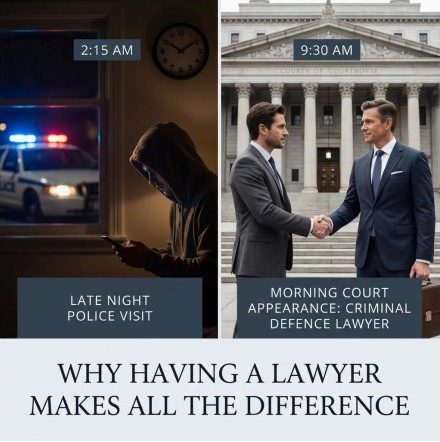
The phone rings at 11:47 PM. Police are at your door, or worse: you’re already in custody facing
questioning. By 9:00 AM the next morning, you’re standing in a courtroom facing serious criminal
charges. What happened in those crucial hours between the late-night encounter and your court appearance can determine whether you walk free or face conviction.
The difference isn’t just timing: it’s whether you had expert legal representation when it mattered
most.
Why Late Night Police Encounters Are Legally Dangerous
Police officers know that late-night encounters catch people at their most vulnerable. You’re tired,
confused, and likely to make statements that will later be used against you in court. But being out
late at night isn’t a crime: and police must have reasonable, articulable suspicion to stop or question you.
Here’s what most people don’t realize: courts scrutinize late-night police encounters more closely
than daytime stops. Vague justifications like “acting suspicious” or “it was late” don’t meet the legal
threshold for detention under NSW law.
Without immediate legal advice, you’re likely to:
• Answer questions that incriminate you
• Consent to searches you can legally refuse
• Make admissions that become the prosecution’s strongest evidence
• Misunderstand your rights during police questioning
The critical difference: A criminal defence lawyer can intervene immediately, even during late-night
questioning. We can ensure police follow proper procedures, protect your right to silence, and prevent violations of your constitutional protections before they occur.
The 48-Hour Window That Determines Your Future
From the moment police first contact you to your first court appearance, you have a narrow window
where expert legal intervention can change everything. In NSW, if you’re arrested and held, you must
appear before a magistrate within 48-72 hours. This timeframe is crucial.
Scenario 1: Late Night Arrest Without Legal Representation
• Police questioning continues for hours without legal advice
• You make statements thinking cooperation will help your case
• Evidence is gathered that could have been legally challenged
• You spend 24+ hours in custody before seeing a lawyer
• By morning court, the prosecution’s case is already built
Scenario 2: Immediate Legal Representation
• Lawyer intervenes during or immediately after police contact
• Your right to silence is properly exercised
• Police procedures are scrutinized in real-time
• Potentially illegal searches or seizures are identified
• Evidence gathering is limited to what’s legally permissible

Why Morning Court Appearances Without Preparation Are Disastrous
Standing in court without proper legal preparation is like performing surgery without medical training. The magistrate will review charges, your criminal history, and assess flight risk: all within minutes.
What happens at this first appearance sets the trajectory for your entire case.
Without legal representation, you face:
1. Inappropriate bail conditions that restrict your freedom unnecessarily
2. Missed opportunities to challenge the legality of evidence
3. Procedural mistakes that can’t be undone later
4. Prosecution advantage in framing the narrative
With expert criminal defence:
1. Bail applications are properly prepared and argued
2. Legal challenges to evidence begin immediately
3. Case strategy is developed from day one
4. Constitutional violations are identified and addressed
The Emotional and Psychological Impact
Beyond legal technicalities, the difference between having representation and facing the system
alone affects your mental state and decision-making capacity. Late-night police encounters are inherently coercive: you’re dealing with authority figures in an unfamiliar situation when your judgment is
compromised.
Research shows that people questioned late at night are more likely to:
• Make false confessions due to fatigue and pressure
• Agree to searches they could legally refuse
• Waive important rights without understanding consequences
• Provide information that seems helpful but damages their case
A criminal defence lawyer acts as both legal shield and psychological buffer, ensuring you make informed decisions rather than reactive ones.
Your Next Steps: Protecting Your Rights
Every hour that passes without legal intervention can mean lost evidence that could support your defence. CCTV footage is routinely deleted, witness memories fade, and physical evidence deteriorates or disappears.
Within 24-48 hours of an incident, we need to:
• Preserve CCTV footage from relevant locations
• Interview witnesses while memories are fresh
• Photograph physical evidence and locations
• Challenge illegal searches before evidence is processed
• File applications to exclude improperly obtained evidence
Real example: In a recent assault case, police conducted a late-night arrest based on alleged witness identification. We immediately secured CCTV footage showing our client was nowhere near the incident. Without prompt action, that footage would have been deleted within 30 days, and our client would likely have been convicted.
Constitutional Protections That Apply From the First Contact
Your rights under Australian law don’t start when you reach court: they apply from the moment police first approach you. Understanding and exercising these rights correctly requires immediate expert guidance.
Key protections that apply during late-night encounters:
1. Right to silence – You don’t have to answer questions beyond providing identification
2. Right to legal representation – You can request a lawyer be present during questioning
3. Protection against unreasonable search – Police need proper justification for searches
4. Right to know why you’re being detained – Police must explain the reason for the stop
The reality: Police are trained to minimize these rights through technique and timing. They know
you’re less likely to assert your rights when tired, confused, or intimidated by late-night encounters.




About Post Author
