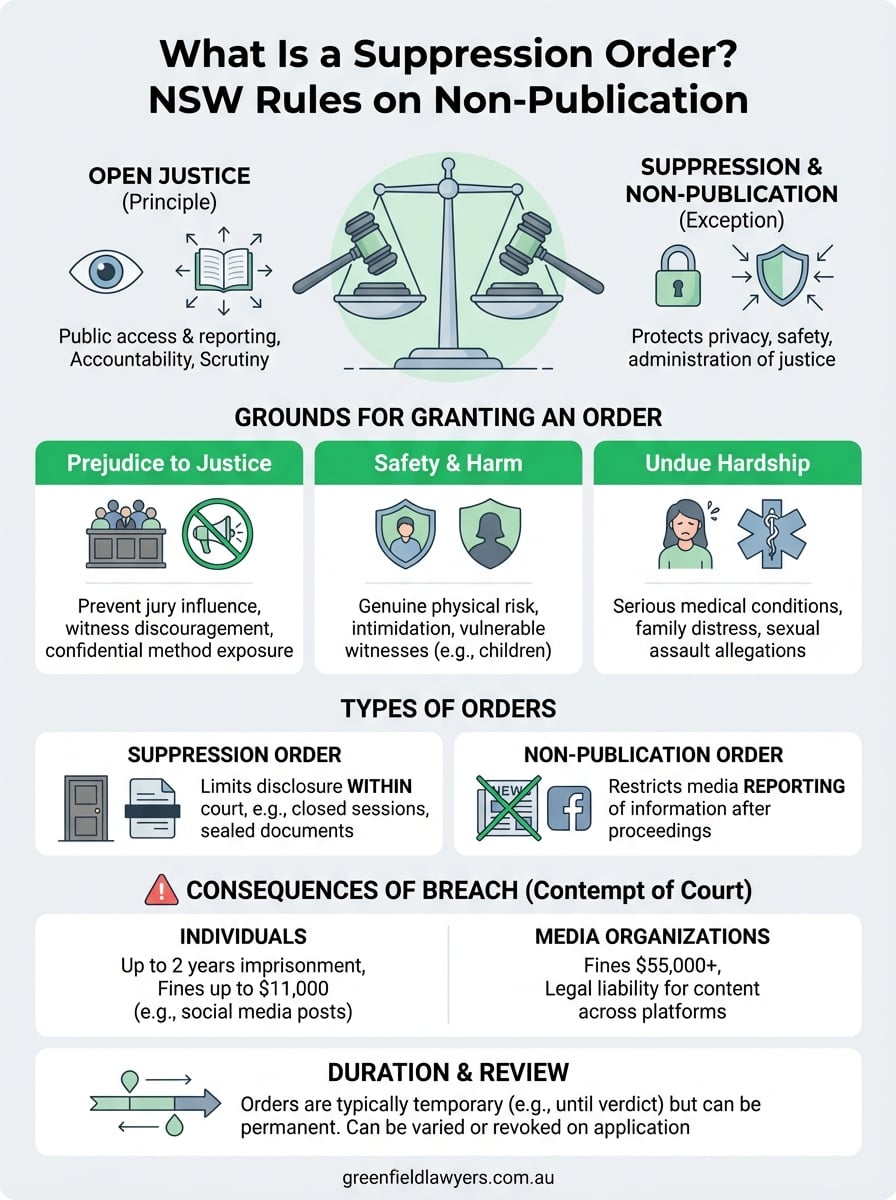
A suppression order is a court direction that prohibits the publication or disclosure of certain information from legal proceedings. These orders can restrict the media and public from reporting your name, specific details about your case, or even that proceedings are happening at all. Courts issue them to protect your privacy, safety, or the administration of justice when open reporting would cause serious harm.
This article explains how suppression orders work in NSW, including when courts grant them and what they actually prevent. You’ll learn the difference between suppression and non-publication orders, the grounds for applying, and what happens if someone breaches one. We’ll also cover how long these orders last and your options for protecting your identity when facing criminal charges.
Why suppression orders override open justice
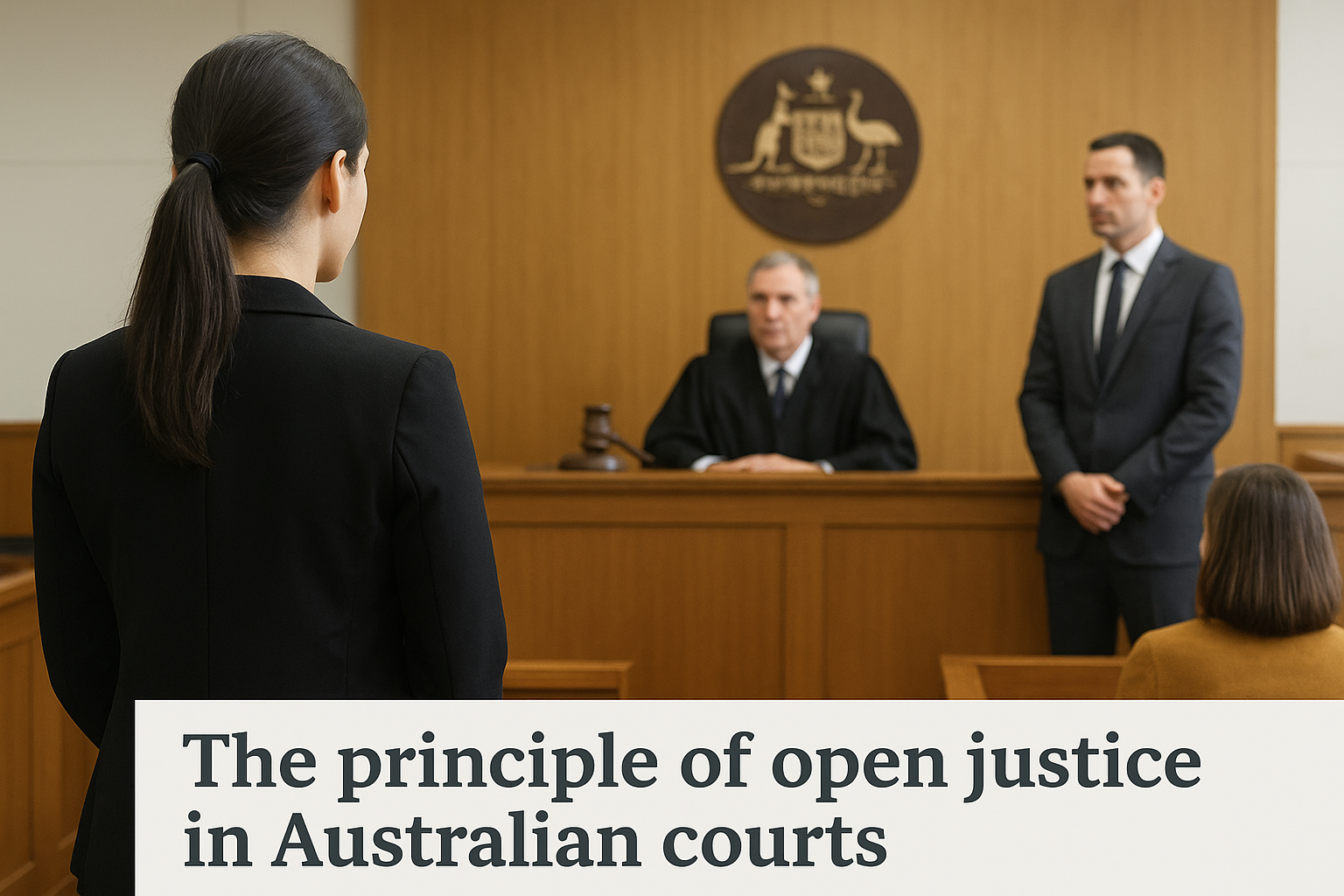
Australian courts operate on the fundamental principle of open justice, which means proceedings must be publicly accessible and reportable. This transparency ensures accountability, maintains public confidence in the legal system, and allows the community to scrutinize how judges apply the law. You can normally attend court hearings, and journalists can report what happens inside the courtroom without restriction.
The principle of open justice in Australian courts
The concept of open justice protects your democratic right to know how courts function and what happens when someone faces criminal charges. Courts conduct proceedings in public view so that judges remain accountable for their decisions and the legal system operates fairly. This openness also helps educate the public about legal processes and deters misconduct within the justice system itself.
However, this principle isn’t absolute. Courts recognize that unrestricted publication can sometimes cause harm that outweighs the benefits of transparency. When you face charges, your personal circumstances might create situations where public reporting would destroy your life, endanger your safety, or prevent a fair trial. Understanding what is a suppression order becomes critical in these situations, as it represents one of the few legal mechanisms that can limit public access to court information.
Open justice serves the public interest, but courts must also protect individuals from serious harm when transparency would cause irreparable damage.
When competing interests require restriction
Courts grant suppression orders when specific harms outweigh the public’s right to know. Your safety might be at risk if identifying details become public, particularly in cases involving organized crime or witness protection. Children and vulnerable witnesses receive special consideration because exposing their identities could cause psychological trauma or discourage others from reporting crimes.
Medical conditions, sexual assault allegations, and family circumstances also justify restrictions. If you suffer from a mental health condition that could worsen with public exposure, or if your family members would face harassment, courts may limit what the media can report. National security concerns, ongoing investigations, and the risk of prejudicing future trials also provide valid grounds for restricting publication.
The legal test courts apply
Judges don’t issue suppression orders lightly. They must follow the Court Suppression and Non-publication Orders Act 2010 (NSW), which requires them to balance your interests against the public interest in open justice. You need to prove that the order is necessary to prevent prejudice to the proper administration of justice, protect your safety, or prevent undue hardship.
The court considers whether alternative measures could achieve the same protection without restricting publication. These might include pseudonyms, redacted documents, or closed hearings for specific evidence. Suppression orders remain the exception rather than the rule because courts treat open justice as the default position. Your application must demonstrate that no lesser restriction would adequately address the harm you face, and that the need for protection genuinely outweighs society’s interest in transparent proceedings.
How to apply for a suppression order in NSW
You must file a formal application with the court where your proceedings are taking place to request a suppression order. The application requires you to clearly explain why you need the order and what specific information you want protected. Courts don’t grant these orders automatically, so you’ll need to prepare evidence that demonstrates the necessity of restricting publication. Understanding what is a suppression order and the legal grounds for obtaining one helps you build a stronger application.
Who can make the application
Any party to the proceedings can apply for a suppression order, which means you, your lawyer, the prosecution, or other involved parties have standing. Your legal representative typically handles the application on your behalf, as they understand the procedural requirements and how to present your case effectively. In some situations, the court might issue an order on its own initiative if it identifies concerns during proceedings.
Third parties can also apply if they have a legitimate interest in the outcome. Witnesses, victims, or family members affected by potential publication might seek orders independently. Media organizations sometimes apply for orders to be varied or revoked if they believe the restrictions are too broad or unjustified.
Required documentation and information
You need to prepare a written application that specifies exactly what information the order should cover and for how long. Your application must identify the grounds under the Court Suppression and Non-publication Orders Act 2010 that justify the restriction. Include sworn affidavits or witness statements that provide evidence supporting your claims about potential harm.
Courts require you to demonstrate the specific risk you face rather than making general assertions. If you’re claiming safety concerns, provide details about threats you’ve received or circumstances that create danger. Medical evidence supports applications based on health conditions, while expert opinions might strengthen claims about prejudice to justice.
The strength of your application depends on concrete evidence that demonstrates genuine harm, not speculation about what might happen.
The court hearing process
The court lists your application for a hearing where all parties can make submissions. You’ll present your arguments explaining why the order is necessary, and opposing parties, including media representatives, can challenge your application. Judges consider the public interest in open justice against your need for protection before making a decision.
Courts often issue interim orders immediately if there’s urgency, then schedule a full hearing to determine whether the restriction should continue. Your lawyer presents evidence and legal arguments during this hearing, and the judge decides whether to grant, refuse, or modify your application.
Grounds for making a non-publication order
The Court Suppression and Non-publication Orders Act 2010 (NSW) sets out specific grounds that you must establish before a court will restrict publication. You cannot obtain an order simply because you prefer privacy or want to avoid embarrassment. The legislation requires you to demonstrate that the order is necessary to achieve one of the statutory purposes, and courts interpret these grounds narrowly to preserve open justice wherever possible.
Preventing prejudice to justice
You can apply for an order if publication would prejudice the proper administration of justice. This ground covers situations where media reporting might influence jury members in your trial or contaminate evidence before witnesses testify. If you face multiple charges being heard separately, publicity about the first trial could prevent you from receiving a fair hearing in subsequent proceedings.
Courts also consider whether publication would discourage witnesses from testifying or expose confidential investigative methods. You might succeed if unrestricted reporting would reveal police techniques still being used in ongoing investigations or identify informants whose cooperation depends on anonymity.
Protecting safety and preventing harm
Your personal safety or that of another person provides strong grounds for restriction. Courts grant orders when publication creates a genuine risk of physical harm, stalking, or intimidation. If you’re cooperating with authorities against dangerous criminals or testifying in organized crime cases, identifying information could put your life at risk.
Courts recognize that some cases involve real threats to personal safety that justify departing from the principle of open justice.
Preventing undue hardship to parties or witnesses also qualifies as a statutory ground. You need to show that publication would cause distress or harm beyond what you’d normally expect from court proceedings. Sexual assault complainants, children, and people with serious medical conditions often receive protection under this provision. Understanding what is a suppression order helps you recognize when these grounds apply to your situation and whether you have legitimate reasons to seek restricted publication.
Difference between suppression and non-publication
The Court Suppression and Non-publication Orders Act 2010 (NSW) creates two distinct types of orders that protect information in different ways. While both restrict what the public can access, they operate through separate mechanisms and affect different stages of court proceedings. Understanding what is a suppression order versus a non-publication order helps you request the right protection for your specific circumstances.
What a suppression order prevents
A suppression order stops information from being disclosed or accessed in court documents and proceedings. This type of order restricts what happens inside the courtroom itself, preventing certain evidence from being presented in open court or requiring the court to close during sensitive testimony. You might need this protection when evidence contains details that would harm your case if heard publicly.
Courts use suppression orders to limit who can attend proceedings or access court files. If you obtain this order, the court might hear parts of your case in a closed session where only essential parties are present. The order can also seal documents so they remain confidential within the court system itself.
What a non-publication order restricts
Non-publication orders control what the media and public can report about proceedings that have already occurred. This order doesn’t stop information from being presented in court, but it prohibits publishing or broadcasting that information outside the courtroom. You can still have an open hearing, but journalists and members of the public cannot share specific details afterward.
These orders specify exactly what information cannot be published. You might obtain an order preventing media from reporting your name and identifying details while allowing them to describe the nature of the charges. Courts can restrict publication of evidence, witness identities, or procedural matters depending on your needs.
Non-publication orders allow proceedings to remain open while protecting specific information from reaching a wider audience through media coverage.
How courts apply each type of order
Courts often issue both orders simultaneously when your situation requires comprehensive protection. If you face charges involving sensitive medical information, the court might suppress evidence during certain testimony and also prevent publication of those details. The orders work together to protect you at different stages of the legal process.
Judges tailor each order to address specific risks rather than applying blanket restrictions. Your suppression order might close the court only during particular witness testimony, while your non-publication order prevents media from identifying you throughout the entire proceeding. This targeted approach balances your protection needs against maintaining maximum transparency in court processes.
Consequences of breaching a court order
Violating a suppression or non-publication order carries serious legal consequences that can result in criminal prosecution. If you publish restricted information or disclose details covered by an order, you face contempt of court charges regardless of whether you acted intentionally or accidentally. Courts treat these breaches severely because they undermine judicial authority and can cause irreparable harm to parties the order was designed to protect. Understanding what is a suppression order includes knowing the penalties for ignoring one.
Criminal penalties for individuals
You face maximum penalties of two years imprisonment or fines up to $11,000 if convicted of breaching a suppression order in NSW. Courts can impose these penalties on anyone who publishes prohibited information, including journalists, social media users, and members of the public who share restricted details. The penalty applies even if you weren’t present in court when the order was made, provided you had knowledge or should reasonably have known about the restriction.

Prosecutors don’t need to prove you intended to cause harm. Your awareness of the order and the act of publication itself establish the offence. Courts have convicted people for sharing information on social media platforms, discussing cases in online forums, and publishing details in traditional media outlets. Each separate instance of publication can constitute a distinct offence, meaning multiple posts or articles can result in multiple charges.
Publishing restricted information from court proceedings, even accidentally or without malicious intent, can result in criminal conviction and substantial penalties.
Media organizations and legal liability
Media outlets face even harsher penalties when they breach orders, with fines reaching $55,000 or more depending on the circumstances. Organizations cannot avoid liability by claiming their journalists acted independently. The company remains legally responsible for what it publishes across all platforms, including websites, social media accounts, and broadcast content.
Editors and publishers can face individual prosecution alongside their organizations. Courts hold both the person who authorised publication and the entity that distributed it accountable. Your organization might also face civil litigation from affected parties seeking damages for harm caused by the breach, creating additional financial and reputational consequences beyond criminal penalties.
Duration and review of suppression orders
Suppression and non-publication orders don’t necessarily last forever. Courts specify the duration of each order when they grant it, and you can apply to have orders varied or revoked if circumstances change. The period depends on why the court issued the restriction in the first place and whether the underlying reasons for protection remain valid. Understanding what is a suppression order includes knowing that these restrictions can be temporary or ongoing based on your specific situation.
Temporary and permanent order periods
Courts typically set specific timeframes for suppression orders rather than making them permanent. If you obtained an order to prevent prejudice during your trial, it might expire once the jury delivers its verdict and the risk of contamination disappears. Orders protecting witness safety during proceedings often remain in force until those individuals complete their testimony and leave the jurisdiction.
Some orders continue indefinitely when the need for protection doesn’t diminish over time. Sexual assault complainants and children frequently receive ongoing protection that extends beyond the conclusion of proceedings. Your order might specify that it remains in force “until further order of the court,” which means it continues until someone successfully applies to have it lifted or modified.
Orders protecting vulnerable witnesses or addressing ongoing safety concerns typically remain in force longer than those preventing prejudice to specific proceedings.
Applying to vary or revoke orders
You can apply to the court to change or remove an order if circumstances have altered since it was granted. Media organizations frequently seek to revoke orders once the original justification no longer exists, particularly when trials have concluded and the risk of prejudicing justice has passed. Your application must demonstrate that the grounds for the order have changed or that the restriction is no longer necessary.
Courts also review orders on their own initiative if they identify that circumstances have evolved. Parties opposing the order can present evidence showing that the public interest in open justice now outweighs the need for continued protection. The process mirrors the original application, requiring you to attend a hearing where the judge considers fresh evidence and arguments before deciding whether to maintain, modify, or remove the restriction.
Protecting your identity in court
Understanding what is a suppression order gives you powerful legal tools to protect your privacy when facing criminal charges in NSW. Courts recognize that unrestricted publication can destroy your reputation, endanger your safety, and prevent you from rebuilding your life after proceedings conclude. You have legitimate options to seek protection through suppression or non-publication orders when you can demonstrate genuine harm.
Criminal proceedings create enough stress without worrying about media coverage affecting your employment, relationships, and future opportunities. Your lawyer can assess whether your circumstances justify applying for a court order and prepare the evidence and arguments needed to support your application. The application process requires detailed preparation and understanding of the legal grounds courts will accept.
If you need advice about protecting your identity during criminal proceedings, contact our criminal defence team for confidential guidance. We can evaluate your situation and help you pursue the appropriate court orders to safeguard your privacy and interests.