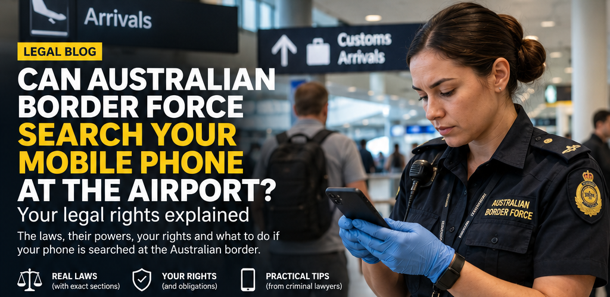
UNLOCK YOUR PHONE.” Can Australian Border Force Really Read Your WhatsApp Messages at Sydney Airport?
The airport search powers every Australian traveller should know before their next overseas trip.
Imagine this. You have just landed at Sydney Airport after an overseas holiday. You collect your luggage and head towards the exit. An Australian Border Force (ABF) officer asks to examine your phone. Then comes the question: “What is your password?”
Can the officer read your WhatsApp messages, examine your photographs, copy personal documents or retain your phone? The answer depends on the particular statutory power being exercised.
1. Can Border Force search your phone without a warrant?
Generally, yes. Section 186(1) of the Customs Act 1901 (Cth) authorises an officer to examine goods subject to customs control. Section 186(2) permits steps reasonably necessary to facilitate examination, and section 186(3) includes reading documents, including electronically. A mobile phone brought into Australia can be examined under this power without a general requirement for a warrant or reasonable suspicion. The power is nonetheless confined by its statutory purpose and terms.
2. Can officers read WhatsApp messages, photos and emails?
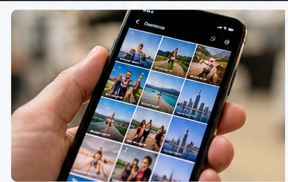
Potentially. Electronic material stored on the device can fall within an examination. This may include locally stored messages, photographs, videos, downloaded emails and documents. Data stored on the phone should be distinguished from material held solely in remote cloud accounts. Section 186 does not itself provide unrestricted access to online services.
3. Can they copy information from the device?
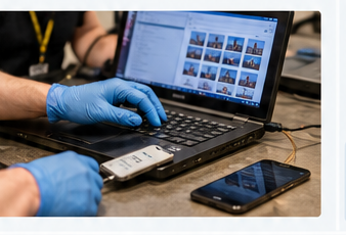
Section 186A of the Customs Act governs copying documents and taking extracts in the circumstances specified by that section. It is distinct from the initial power to examine. An officer cannot assume that permission to inspect automatically authorises indiscriminate copying of all private data.
4. Must you disclose your password?
Section 186 itself does not impose a general duty to disclose a password merely because it is requested. Section 195 requires answers to questions properly asked within its customs-questioning power, while other provisions may impose separate duties in specific circumstances. Section 201A deals with access-assistance orders in relevant warrant contexts. Whether refusal is unlawful depends on the precise legal requirement—not simply the fact that an officer asks.
If asked to unlock a phone, calmly ask whether the request is voluntary or compulsory and which provision is relied upon. Do not obstruct an officer or interfere with evidence.
5. Can your phone be retained or seized?
A phone may be retained for the time reasonably necessary to complete a lawful examination under section 186. Formal seizure or forfeiture requires a separate statutory basis, potentially including applicable seizure provisions such as section 203B where its conditions are met. Ask for a receipt, officer identification, a reference number and information about return of the device.
6. What about communications with your lawyer?
Confidential communications made for the dominant purpose of legal advice or litigation may attract legal professional privilege. If such material is on the device, expressly identify the claim and request that privileged content not be examined or copied until appropriate arrangements are made. Privilege does not automatically exempt the entire phone from inspection.
7. Do Australian citizens have the same exposure?
Yes. Australian citizenship does not, by itself, exempt a traveller’s device from customs examination. Different powers under migration legislation may apply to non-citizens in particular circumstances, but they should not be conflated with section 186.
8. What should you do at the airport?
- Remain calm and do not physically obstruct officers.
- Ask which statutory power is being exercised.
- Clarify whether a password request is voluntary or legally compulsory.
- Identify any genuinely legally privileged material.
- Request legal advice if the circumstances raise potential criminal exposure.
- If the device is retained, ask for a property receipt and return arrangements.
- Do not delete, alter, hide or remotely wipe material during an examination.
9. Can a phone search lead to criminal charges?
Yes. Information found during a border examination may prompt further investigation or be used in criminal proceedings, subject to applicable evidentiary rules. Where material was obtained unlawfully or improperly, section 138 of the Evidence Act 1995 (Cth), or the corresponding NSW provision where applicable, may be relevant. Exclusion is not automatic.
Need legal advice?

If Australian Border Force or the Australian Federal Police has examined, copied or retained your phone, obtain advice about the specific powers used and any implications for a criminal investigation.
GREENFIELD CRIMINAL & AVO DEFENCE LAWYERS | Sydney, NSW | www.greenfieldlawyers.com.au
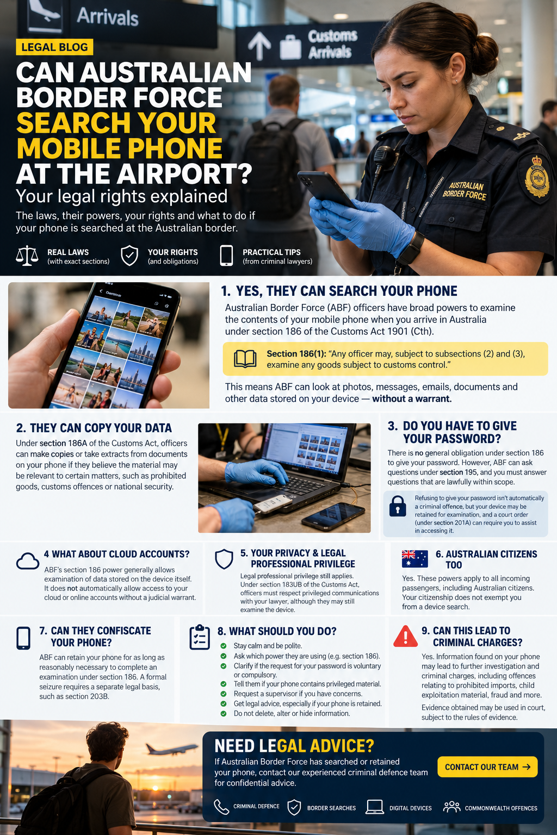
Shareable legal infographic


About Post Author
