
What Is An Expert Witness? Role, Duties And Qualifications
When facing criminal charges in Sydney, the difference between conviction and acquittal can come down to specialised testimony that the court cannot obtain elsewhere. Understanding what is an expert witness becomes essential when complex evidence, such as DNA analysis, psychological assessments, or digital forensics, plays a central role in your matter. These professionals do far more than simply recount what they observed; they interpret technical information that would otherwise remain inaccessible to judges and juries.
Expert witnesses hold a unique position in the Australian legal system. They’re permitted to offer professional opinions based on their training and experience, something ordinary witnesses cannot do. This distinction matters because their conclusions can directly influence whether evidence is admitted, how it’s understood, and ultimately, how your case resolves.
At Greenfield Lawyers, we regularly engage expert witnesses, including psychologists, computer forensics specialists, and vehicle crash consultants, to strengthen our clients’ criminal defence cases. This article covers the specific role expert witnesses play in court, the qualifications required to testify as one, their core duties, and how their evidence differs from standard witness testimony. Whether you’re currently facing charges or simply want to understand the legal process better, this guide provides the clarity you need.
What an expert witness is in Australia
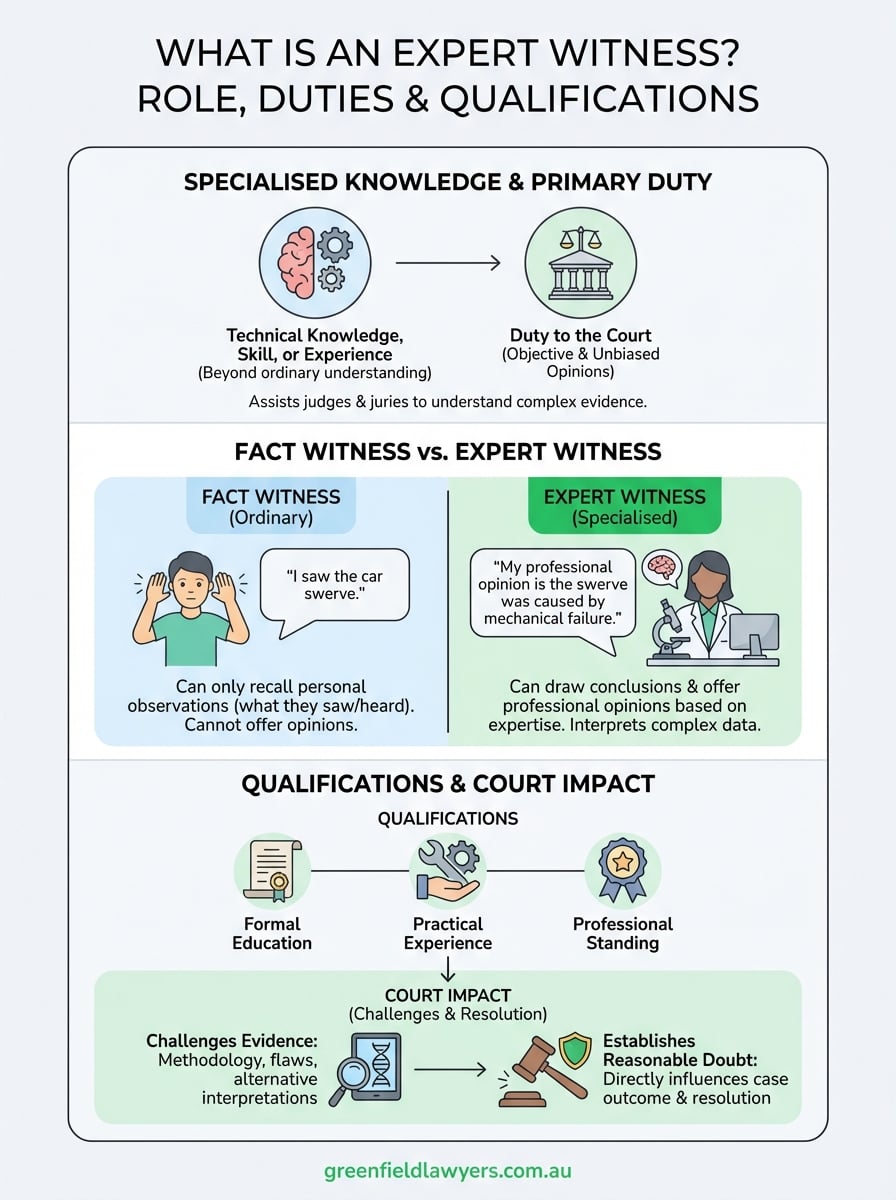
An expert witness in Australia is someone who possesses specialised knowledge, skill, or experience in a particular field and provides opinion evidence to assist the court in understanding complex technical matters. Unlike ordinary witnesses who can only testify about what they saw or heard, expert witnesses are permitted to draw conclusions and offer professional opinions based on their expertise. Australian courts recognise that judges and juries often lack the technical knowledge required to evaluate certain types of evidence, making expert testimony essential in many criminal matters.
The role stems from established common law principles and statutory provisions. Courts accept expert evidence when it covers subject matter beyond the ordinary knowledge of the judge or jury, and when the witness has gained their expertise through study, training, or practical experience. Your criminal defence lawyer may engage an expert witness when your case involves forensic science, psychology, medical issues, digital technology, or any other specialised area that requires professional interpretation.
Legal Definition Under Australian Law
Australian courts define expert witnesses through both legislation and case law precedents. The Evidence Act 1995 (NSW and Cth) provides the statutory framework, particularly under sections 79 and 80, which outline when opinion evidence is admissible. Section 79 states that expert opinion evidence is admissible when the person has specialised knowledge based on training, study, or experience, and the opinion is wholly or substantially based on that knowledge. This establishes a clear legal threshold for who can testify as an expert.
Courts apply what they call the “field of expertise” test to determine whether someone qualifies. You cannot simply hire anyone with credentials; the witness must demonstrate expertise specifically relevant to the issues in your case. Judges scrutinise the connection between the witness’s qualifications and the opinions they’re offering. For instance, a forensic psychologist might qualify to testify about mental state at the time of an offence, but not about vehicle accident reconstruction, even if they hold a PhD.
“The expert witness’s primary duty is to the court, not to the party who engaged them.”
How Expert Witnesses Differ From Fact Witnesses
Fact witnesses can only testify about what they personally observed, heard, or experienced. They cannot offer opinions or draw conclusions beyond common knowledge. If a fact witness saw a car accident, they can describe the vehicles’ positions, the sounds they heard, and the weather conditions. They cannot, however, explain why the accident occurred or estimate the vehicles’ speeds based on skid marks, as this requires specialised knowledge.
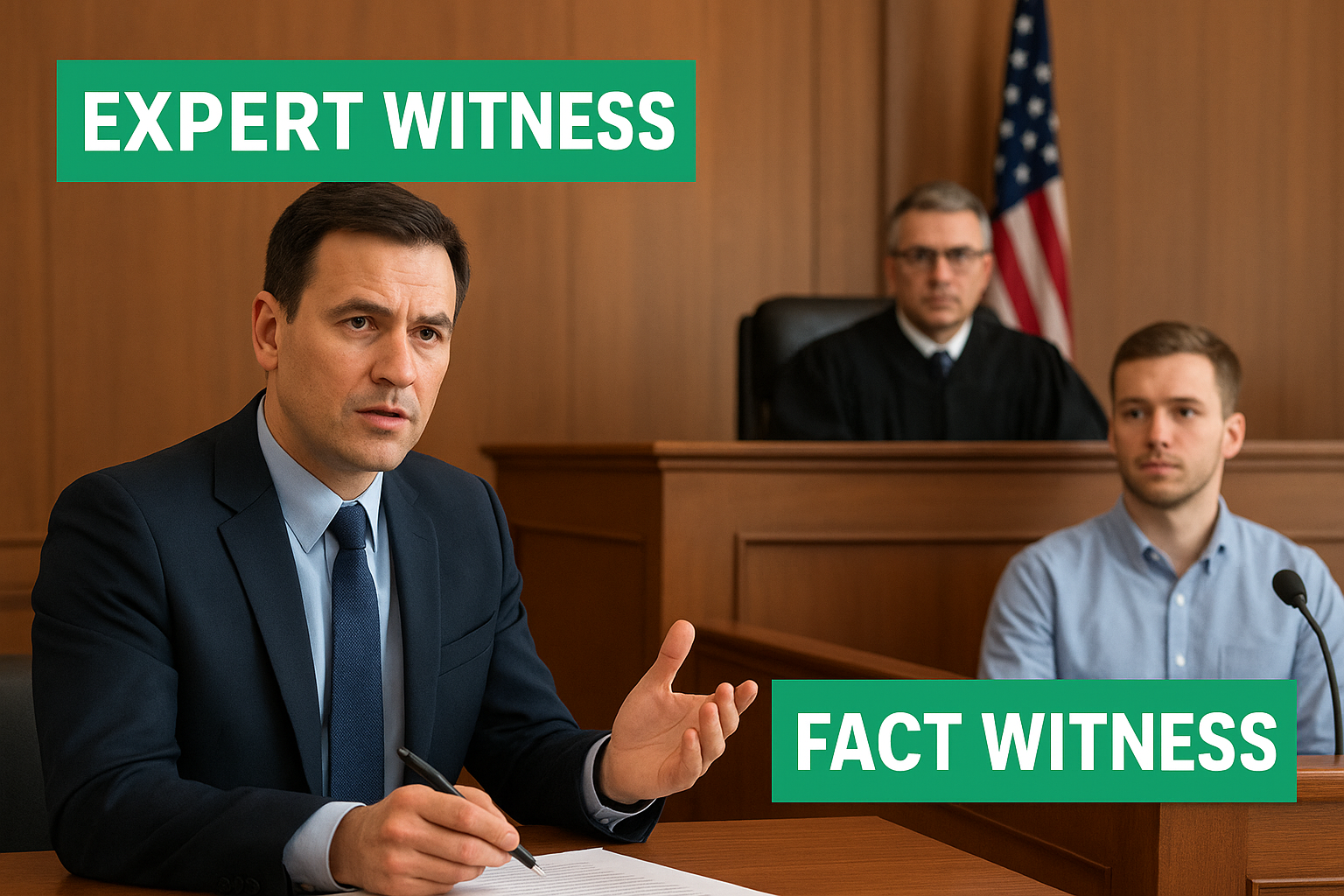
Expert witnesses, by contrast, provide interpretive evidence and professional conclusions. They analyse information, apply technical principles, and form opinions that help the court understand complex matters. A vehicle crash consultant examines the physical evidence, applies engineering principles, and offers an opinion about causation and contributing factors. This distinction becomes crucial in criminal cases where technical evidence determines guilt or innocence.
Your rights as an accused person include the ability to engage your own expert witnesses to challenge the prosecution’s evidence. When the prosecution relies on expert testimony, such as DNA analysis or drug identification, you can instruct your defence lawyer to obtain an independent expert review. This expert examines the same evidence, identifies potential flaws in methodology, and provides an alternative interpretation that may support your defence. Australian courts recognise this right as fundamental to a fair trial.
The admissibility requirements ensure expert evidence remains reliable. Courts assess whether the expert’s methodology is sound and accepted within their professional field. They also examine whether the expert has maintained objectivity or appears biased toward the party who engaged them. Your lawyer must carefully select experts who can withstand cross-examination and whose opinions rest on demonstrable scientific or professional principles rather than speculation or advocacy.
Why expert witnesses matter in criminal cases
Expert witnesses hold significant weight in criminal proceedings because they provide technical interpretations that directly influence how courts evaluate evidence. When you face charges involving DNA, digital forensics, blood alcohol analysis, or medical injuries, judges and juries rely on experts to translate complex data into understandable conclusions. The prosecution regularly engages experts to support their case, and without your own expert testimony to challenge their findings, you risk accepting the Crown’s version of events as factual when alternative explanations may exist.
Technical Evidence Requires Specialised Interpretation
Criminal cases increasingly depend on scientific and technical evidence that falls outside the ordinary knowledge of court participants. DNA profiles, drug composition analyses, computer data extraction, and firearms examination all require specialised training to interpret properly. When prosecutors present this evidence, they typically do so through expert witnesses who explain not only what the tests revealed but what those results mean for your case. You need to understand that without an expert to challenge these conclusions, the court treats the prosecution’s scientific evidence as reliable and accurate by default.
Your defence lawyer engages experts to identify methodological flaws, contamination risks, and alternative interpretations that the prosecution’s witnesses may have overlooked or dismissed. A computer forensics expert might discover that deleted files were recovered improperly, rendering them inadmissible. A toxicology expert could reveal that blood samples were stored incorrectly, potentially compromising test results. These technical defences require expert testimony because judges and juries cannot evaluate such matters without specialised knowledge.
Impact on Case Outcomes
Expert testimony can fundamentally alter your case’s trajectory. In matters where reasonable doubt hinges on technical evidence, an expert’s opinion can mean the difference between conviction and acquittal. Consider a drug possession charge where forensic analysis identifies a substance as methamphetamine. Your expert might challenge the testing procedure, question whether proper protocols were followed, or demonstrate that the substance could be something entirely different based on additional testing.
“Expert witnesses provide the technical foundation for challenging prosecution evidence and establishing reasonable doubt.”
Courts routinely dismiss charges, reduce sentences, or return not-guilty verdicts based on compelling expert testimony that undermines the Crown’s case. Understanding what is an expert witness helps you recognise when your matter requires this specialised support. Psychological assessments can establish mental impairment defences, while medical experts can contradict prosecution claims about injury causation. Your lawyer’s ability to identify when expert evidence becomes necessary and then engage the right specialists directly affects your defence strategy’s effectiveness and your ultimate outcome in court.
What makes someone qualified as an expert
Courts assess expert qualifications through a rigorous evaluation process that examines both formal credentials and practical experience. You cannot simply present someone with impressive qualifications and expect automatic acceptance as an expert witness. Australian judges apply specific tests to determine whether a person possesses sufficient specialised knowledge to offer opinion evidence in your criminal matter. The court considers their education, professional standing, publications, peer recognition, and hands-on experience within their field before permitting them to testify as an expert.
Educational and Professional Background
Formal qualifications form the foundation of expert witness credibility. Courts typically require relevant tertiary qualifications, such as degrees, diplomas, or professional certifications that demonstrate structured learning in the specialist area. A forensic psychologist offering evidence about mental state needs appropriate psychology degrees, registration with the Psychology Board of Australia, and specialised training in forensic assessment. Your lawyer verifies these credentials before engaging an expert because the prosecution will scrutinise them during cross-examination.
Professional memberships and ongoing education strengthen an expert’s standing. Courts favour witnesses who maintain active involvement in professional organisations, attend conferences, publish research, and stay current with developments in their field. Understanding what is an expert witness includes recognising that stagnant knowledge undermines credibility. An expert who qualified 20 years ago but hasn’t engaged in continuing professional development faces challenges defending their opinions against more current research or methodologies.
Practical Experience and Field Recognition
Hands-on experience often carries more weight than academic credentials alone. Courts value experts who have applied their knowledge in real-world settings rather than purely theoretical contexts. A computer forensics specialist who has examined thousands of devices and testified in numerous cases brings practical insights that someone with only academic training cannot match. Your defence benefits when your expert demonstrates extensive casework experience that mirrors the technical issues in your matter.
“Courts assess expert qualifications by examining both formal education and demonstrated practical application of specialised knowledge.”
Peer recognition indicates reliability and competence within a professional community. Experts who have published peer-reviewed research, taught at universities, trained other professionals, or received industry awards establish their standing more convincingly. The court examines whether the expert’s methodology aligns with accepted practices within their field. Your lawyer selects experts whose qualifications withstand scrutiny and whose opinions rest on sound professional foundations rather than personal theories or outdated approaches.
What expert witnesses can and cannot do
Expert witnesses operate within clearly defined boundaries that separate legitimate professional testimony from advocacy or speculation. Understanding what is an expert witness means recognising these limitations, as they protect the integrity of court proceedings and ensure opinions rest on genuine expertise rather than bias. Courts impose strict rules about how experts present evidence, what they can express opinions about, and how they conduct themselves during proceedings. Your defence lawyer needs experts who understand these boundaries and maintain their objectivity throughout the legal process.
Permitted Activities and Responsibilities
Experts can offer professional opinions based on their specialised knowledge when those opinions assist the court in understanding technical matters. They examine evidence, apply accepted methodologies within their field, and draw conclusions that judges or juries could not reach independently. Your expert can review prosecution evidence, conduct independent testing or analysis, and provide written reports that outline their findings and opinions. They testify in court, explain complex concepts in accessible language, and respond to questions during cross-examination about their methodology and conclusions.
Collaboration with your legal team forms another permitted activity. Experts can discuss the case with your lawyer, review relevant documents, attend conferences, and help identify weaknesses in the prosecution’s technical evidence. They can suggest additional testing, recommend other specialists who might assist your defence, and provide strategic advice about how to challenge the Crown’s expert witnesses. Courts recognise that this collaboration helps experts understand the legal issues and focus their analysis on matters relevant to your case.
“Expert witnesses must base their opinions on sound methodology and remain independent from the party who engaged them.”
Prohibited Actions and Limitations
Experts cannot act as advocates for the party who engaged them. Their duty runs to the court, not to you or your lawyer, which means they cannot manipulate findings or suppress contradictory evidence to support your case. When experts discover information that undermines your defence, they must disclose it. Courts reject expert testimony that appears tailored to reach predetermined conclusions rather than objective analysis. Your expert cannot testify about matters outside their field of expertise, even if they hold impressive credentials in another area.
Speculation and unfounded opinions remain strictly prohibited. Experts must demonstrate that their conclusions rest on accepted principles within their professional field and follow sound methodology. They cannot guess, theorise without supporting evidence, or offer opinions based purely on personal belief. Courts exclude expert evidence when witnesses stray beyond their qualifications, adopt unreliable methods, or present opinions that lack proper foundation. Your lawyer ensures your expert witnesses understand these boundaries and maintains their credibility throughout proceedings.
How expert evidence gets used in court
Courts follow a structured process for introducing and evaluating expert testimony, starting well before your matter reaches the courtroom. Understanding what is an expert witness includes recognising how their evidence moves through the legal system, from initial engagement to final submissions. Your lawyer coordinates closely with experts to ensure their evidence meets procedural requirements, addresses the relevant issues, and withstands scrutiny during trial. The process involves written reports, pre-trial conferences, courtroom testimony, and cross-examination, each stage serving specific purposes within your criminal defence.
Pre-Trial Preparation and Report Writing
Experts produce detailed written reports that outline their qualifications, methodology, findings, and opinions before trial commences. Your lawyer provides the expert with relevant materials, such as prosecution evidence, witness statements, and forensic test results, which the expert reviews and analyses. These reports must comply with court rules, including declarations that the expert understands their duty to the court and has provided objective opinions based on their specialised knowledge. Courts require disclosure of these reports to the prosecution, usually weeks before trial, allowing both sides to prepare responses.

Pre-trial conferences often occur where experts from opposing sides meet to narrow the issues in dispute. Your expert and the prosecution’s expert discuss their findings, identify areas of agreement, and clarify where their opinions diverge. This process streamlines the trial by eliminating uncontested technical matters and focusing court time on genuine disputes. Your lawyer attends these conferences to ensure your interests remain protected and to understand exactly what technical issues will require resolution at trial.
Court Presentation and Testimony
Experts testify in person during your trial, presenting their opinions through examination-in-chief conducted by the lawyer who engaged them. Your lawyer asks questions that allow the expert to explain their qualifications, describe their methodology, present their findings, and state their professional conclusions. The expert uses language that judges and juries can understand, often employing diagrams, photographs, or demonstrations to illustrate complex concepts. Courts permit experts to refer to their written reports while testifying, ensuring accuracy and completeness in their evidence.
“Expert witnesses must explain technical concepts clearly enough for judges and juries to understand without specialised knowledge.”
Cross-Examination and Challenge
The opposing party cross-examines your expert to test the reliability and validity of their opinions. Prosecutors challenge methodology, question whether the expert considered all relevant factors, and probe for potential bias or errors. Your expert must defend their conclusions, explain their reasoning, and demonstrate that their opinions rest on sound professional principles rather than speculation. Courts assess expert credibility based on how well witnesses handle cross-examination, maintain objectivity, and support their conclusions with verifiable evidence. Your lawyer prepares experts thoroughly for this scrutiny, ensuring they understand the case strategy and can respond effectively to anticipated challenges.
Common types of expert witnesses
Criminal defence matters in Australia rely on various categories of expert witnesses, each bringing specialised knowledge to different aspects of your case. Understanding what is an expert witness in practical terms means recognising the specific expertise each type offers and when their involvement becomes necessary. Your lawyer selects experts based on the technical issues your matter presents, whether that involves forensic science, medical opinions, psychological assessments, or digital technology. The prosecution regularly engages certain expert types, making it essential you understand which specialists can challenge their evidence and support your defence strategy.
Forensic and Scientific Experts
Forensic specialists provide crucial evidence interpretation in matters involving physical and biological evidence. DNA analysts examine genetic material found at crime scenes, on weapons, or on clothing, offering opinions about identity, contamination risks, and transfer mechanisms. Toxicologists test blood, urine, or tissue samples for drugs and alcohol, determining substance levels and timing of consumption. These experts become essential when challenging prosecution claims about blood alcohol readings, drug identification, or biological evidence linking you to alleged offences.
Ballistics experts analyse firearms, ammunition, and shooting incidents, determining weapon types, firing distances, and trajectory paths. Document examiners evaluate handwriting, signatures, and printed materials to detect forgery or establish authorship. Chemical analysts identify unknown substances, test drug purity, and determine composition of materials relevant to manufacturing or supply charges. Your defence lawyer engages these specialists when prosecution forensic evidence forms the cornerstone of their case against you.
Medical and Psychological Specialists
Medical experts provide opinions about injuries, causation, and medical conditions relevant to criminal charges. Forensic pathologists examine autopsy results, injury patterns, and cause of death in homicide matters. Emergency physicians or surgeons offer evidence about assault injuries, their severity, and likely mechanisms that caused them. These specialists challenge prosecution medical evidence or provide alternative explanations for injuries that support your defence narrative.
Psychologists and psychiatrists assess mental state, capacity, and psychological conditions affecting criminal responsibility. They evaluate whether mental illness, intellectual disability, or psychological trauma affected your behaviour at the time of alleged offences. Neuropsychologists examine brain function and cognitive impairment following head injuries or medical conditions. Your lawyer engages these specialists when your defence involves mental health issues, diminished responsibility, or fitness to plead.
“The right expert witness provides technical knowledge specifically matched to the evidence and issues in your criminal matter.”
Technical and Digital Specialists
Computer forensics experts analyse digital devices, data recovery, and electronic communications in matters involving online activity, fraud, or technology-based offences. They examine mobile phones, computers, and servers, determining what data existed, when it was created, and whether tampering or deletion occurred. Telecommunications specialists trace phone calls, messages, and location data relevant to alibis or prosecution timelines.

Vehicle crash consultants reconstruct traffic accidents, calculate speeds, and analyse collision dynamics in dangerous driving or vehicular manslaughter cases. Engineers assess structural failures, mechanical defects, or safety issues. These technical specialists provide scientific analysis that challenges prosecution assumptions or establishes reasonable doubt through objective data interpretation.
How to work with an expert witness
Working effectively with an expert witness requires careful selection, clear communication, and thorough preparation throughout your criminal matter. Your lawyer coordinates this process, but understanding what is an expert witness and how they integrate into your defence strategy helps you participate actively in protecting your interests. The relationship begins when your lawyer identifies the need for technical expertise, extends through evidence preparation and report writing, and culminates in court testimony that supports your case. Success depends on selecting the right specialist, providing them with complete information, and ensuring they understand the legal issues at stake.
Selecting the Right Expert for Your Case
Your lawyer evaluates potential experts based on their qualifications, experience, and credibility rather than their willingness to support your position. Courts scrutinise expert witnesses intensively, so you need specialists who withstand cross-examination and maintain objectivity under pressure. Your legal team considers whether the expert has testified previously, how they performed in court, and whether their professional reputation remains intact. Lawyers also assess whether the expert’s methodology aligns with accepted practices within their field and whether they communicate complex concepts clearly to non-specialists.
Cost considerations matter, but they should not override quality when selecting experts. Engaging a less qualified expert to save money often backfires when their testimony fails to withstand scrutiny or lacks persuasive weight. Your lawyer discusses fee structures upfront, including hourly rates for report preparation, court attendance charges, and travel expenses. Most experts require retainers before commencing work, with final accounts settled after your matter concludes.
Providing Clear Instructions and Materials
Your lawyer provides experts with comprehensive instructions that outline the legal issues, specific questions requiring answers, and relevant background information about your case. Experts need access to all materials that might influence their opinions, including prosecution evidence, witness statements, photographs, and scientific test results. Withholding information or providing selective materials undermines the expert’s credibility and potentially breaches disclosure obligations to the court.
“Complete and honest disclosure to your expert witness ensures their opinions rest on all available evidence rather than partial information.”
Communication remains open throughout the engagement. Your lawyer maintains regular contact with experts, answering their questions, providing additional materials as needed, and ensuring they understand court deadlines and procedural requirements. Experts inform your legal team immediately if they discover evidence that contradicts your defence or if their opinions change based on new information.
Preparing for Court Testimony
Court preparation involves detailed conferences where your lawyer reviews the expert’s report, anticipated questions, and likely cross-examination strategies from the prosecution. Experts practice explaining technical concepts in plain language, using visual aids where appropriate, and maintaining composure under hostile questioning. Your lawyer ensures experts understand their duty to the court supersedes loyalty to your case and that they must acknowledge limitations in their knowledge or methodology when questioned.
Next steps
Understanding what is an expert witness gives you insight into how specialised testimony can strengthen your criminal defence. When technical evidence plays a central role in your matter, whether that involves forensic analysis, psychological assessments, or digital investigations, engaging the right expert often determines whether charges proceed or collapse under scrutiny. Expert witnesses provide the objective analysis courts require to evaluate complex evidence, and their testimony can establish reasonable doubt that protects your rights.
At Greenfield Lawyers, we maintain established relationships with credible expert witnesses across multiple disciplines who regularly assist our criminal defence clients in Sydney. Our team identifies when expert evidence becomes necessary, selects specialists matched to your specific charges, and coordinates their involvement from initial consultation through court testimony. If you’re facing criminal charges that involve technical or scientific evidence, contact our criminal defence team for urgent legal advice about how expert witnesses can support your case.


About Post Author
