
Expert Witness Code Of Conduct NSW: Duties, Rules In Court
Expert witnesses can shape the outcome of a case. Their testimony carries significant weight with judges and juries, but that influence comes with strict responsibilities. The expert witness code of conduct NSW establishes the rules these specialists must follow when providing evidence in court proceedings, and understanding these requirements matters whether you’re facing criminal charges or involved in civil litigation.
At Greenfield Lawyers, we regularly work alongside expert witnesses in criminal defence matters, from psychologists to forensic specialists. We’ve seen firsthand how proper adherence to Schedule 7 of the Uniform Civil Procedure Rules affects the credibility and admissibility of expert evidence. When an expert fails to meet their obligations, it can compromise an entire case.
This guide explains the duties, rules, and professional standards that govern expert witnesses in New South Wales courts. You’ll learn what experts must include in their reports, how they should conduct themselves during testimony, and why their overriding duty to the court takes precedence over the party who retained them.
What the NSW expert witness code covers
Schedule 7 of the Uniform Civil Procedure Rules 2005 contains the complete code that governs how expert witnesses conduct themselves in New South Wales courts. This schedule outlines specific obligations for both the expert and the party instructing them, creating a framework that ensures expert evidence serves the interests of justice rather than the interests of the party paying for it.
The overriding duty to the court
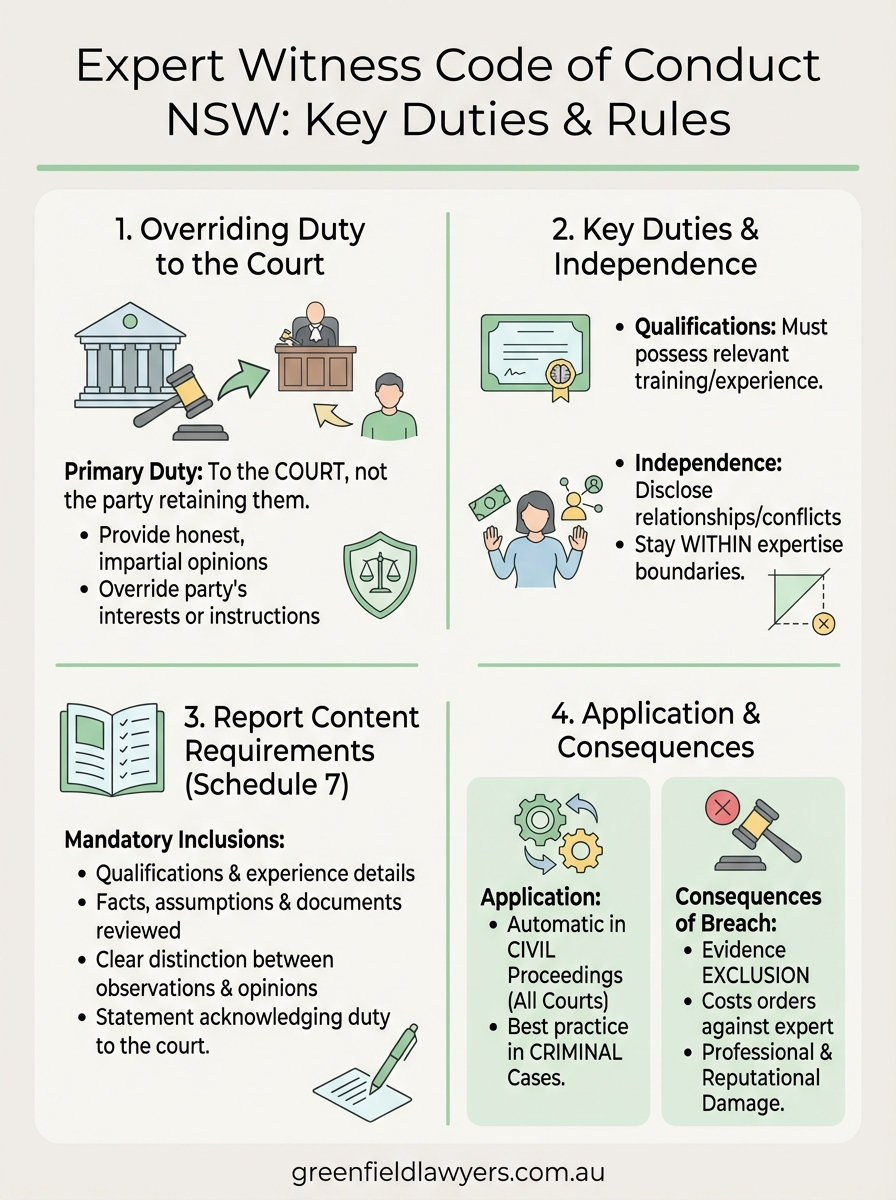
The code establishes that your expert witness owes their primary duty to the court, not to you as the instructing party. This fundamental principle means the expert must provide honest, impartial opinions regardless of whether those opinions support your case. An expert cannot act as an advocate for your position or shape their evidence to favour your desired outcome.
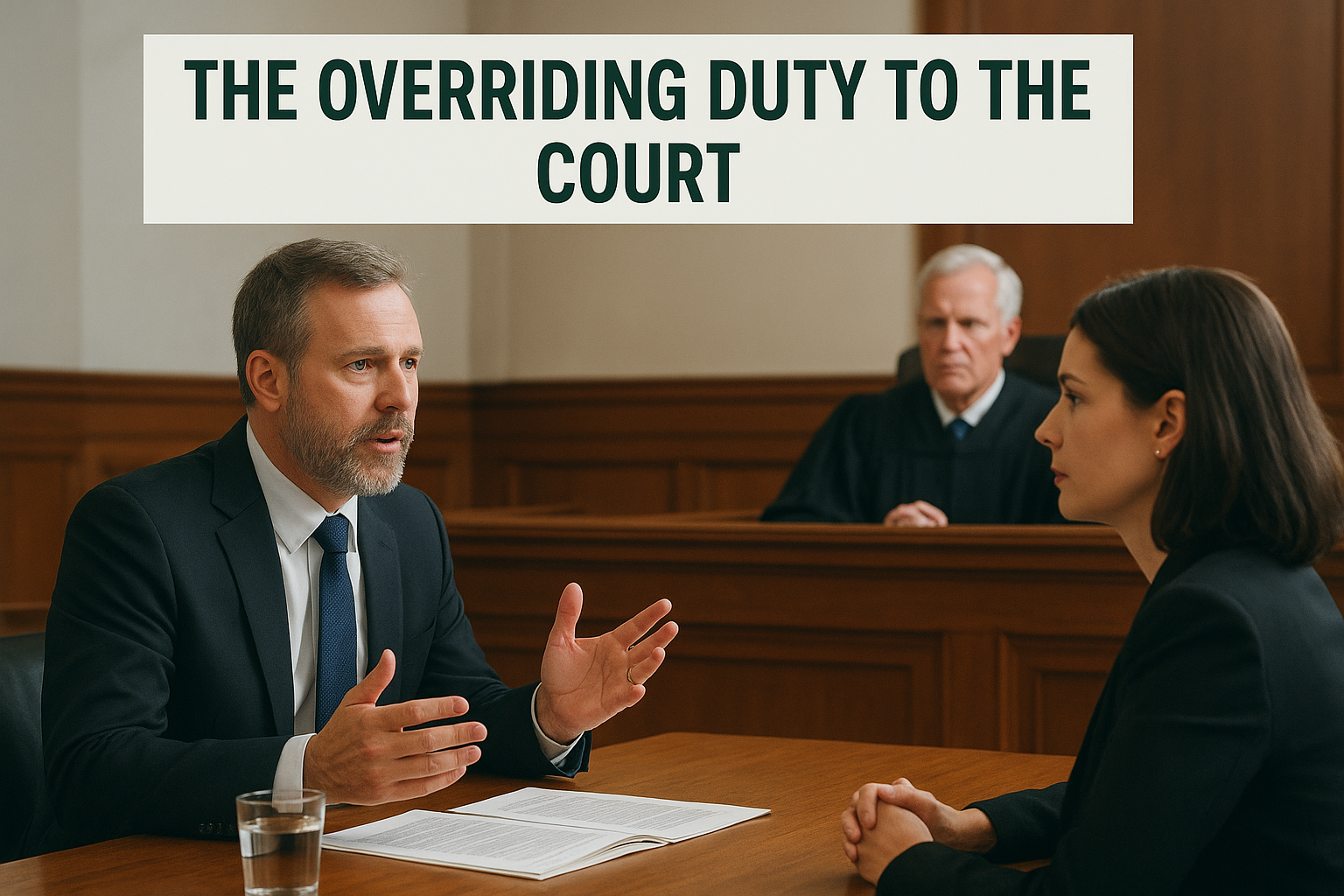
“The expert’s duty to the court overrides any obligation to the person retaining or paying them.”
This requirement protects the integrity of expert evidence. Your expert must present their genuine professional opinion, even if it weakens your case or strengthens your opponent’s arguments.
Rules about expert qualifications and independence
The expert witness code of conduct NSW requires that experts possess appropriate qualifications, training, or experience in their specialised field. Your expert cannot testify outside their area of expertise, and they must clearly identify the boundaries of their knowledge when preparing reports or giving evidence.
Independence forms another critical component of the code. Your expert must disclose any relationship or circumstance that might affect their impartiality, including financial interests, personal connections, or previous involvement with parties in the case. These disclosure requirements let the court assess whether the expert can provide truly objective evidence.
The code also mandates that experts base their opinions on specified facts and assumptions, clearly distinguish between their observations and their opinions, and acknowledge any matters that fall outside their expertise or require further investigation.
When the code applies in NSW court cases
The expert witness code of conduct nsw applies automatically in all civil proceedings across the Supreme Court, District Court, and Local Court. You don’t need a court order or special direction to trigger these requirements. Schedule 7 binds your expert from the moment they agree to provide evidence in a civil matter, creating obligations that exist independently of any party’s instructions.
Civil versus criminal proceedings
Civil proceedings capture the full scope of Schedule 7’s application. Your expert must comply with the code whether you’re defending a negligence claim, pursuing a contract dispute, or involved in family law property matters. The code governs expert evidence in virtually every civil case that reaches a New South Wales court.
Criminal proceedings operate differently. While the expert witness code of conduct doesn’t automatically apply in criminal cases, courts frequently adopt its principles as best practice. Your criminal defence lawyer will often instruct expert witnesses to follow Schedule 7’s standards even when the formal rules don’t mandate it, because these principles establish the baseline for credible, professional expert evidence.
“Courts expect expert witnesses to maintain the same standards of independence and integrity regardless of proceeding type.”
This approach protects the credibility of expert evidence and demonstrates your commitment to presenting reliable testimony that serves the court’s truth-seeking function.
Key duties experts owe the court in NSW
Your expert witness carries several non-negotiable obligations under the expert witness code of conduct NSW, and these duties directly affect the strength and credibility of your evidence. Understanding these requirements helps you select the right expert and ensure they provide testimony that meets court expectations.
The duty of truthfulness and objectivity
Your expert must provide honest, impartial opinions based solely on their professional knowledge and the available evidence. They cannot distort facts, omit relevant information, or shape their conclusions to favour your case. This truthfulness extends to acknowledging limitations in their analysis, including insufficient data, competing theories, or matters requiring further investigation.
“An expert who compromises their objectivity compromises your entire case.”
Objectivity requires your expert to maintain professional independence throughout their involvement. They must resist pressure to advocate for your position and present their findings with the same rigour they would apply in any professional setting.
The duty to stay within expertise boundaries
Your expert cannot venture beyond their qualified areas of knowledge. When preparing reports or testifying, they must clearly identify the limits of their expertise and decline to offer opinions on matters outside their specialised field. This boundary protection prevents unreliable evidence from entering court proceedings and maintains the integrity of expert testimony.
What an NSW expert report must include
Your expert’s written report serves as their primary evidence, and the expert witness code of conduct nsw sets out specific content requirements that your expert must satisfy. Missing any mandatory element can render the report inadmissible or severely damage its credibility. These requirements ensure transparency and accountability in expert evidence.
Mandatory content requirements
Schedule 7 requires your expert’s report to contain several essential components. The expert must identify their qualifications, including relevant training, study, and experience that establishes their expertise. They need to list all documents and materials they reviewed when forming their opinions, creating a clear trail of their analytical process.

Your expert must also state the facts and assumptions upon which they based their opinions. This requirement prevents hidden premises from undermining the reliability of their conclusions. The report needs to distinguish clearly between observations and opinions, preventing confusion about what the expert actually witnessed versus what they inferred or concluded.
“A properly structured expert report gives the court complete transparency about how the expert reached their conclusions.”
Finally, your expert must include a statement acknowledging they understand their duty to the court and have complied with it when preparing the report.
What happens if an expert breaches the code
Breaching the expert witness code of conduct nsw carries serious consequences that extend beyond your individual case. Courts possess multiple remedies to address expert misconduct, and these interventions can derail your litigation strategy while damaging the expert’s professional reputation. Understanding these potential outcomes helps you select reliable experts and ensure they maintain proper standards throughout their involvement.
Court consequences for non-compliance
Your expert’s breach gives the court several intervention options. The court can exclude the expert’s report entirely, preventing any of their evidence from reaching the judge or jury. This exclusion removes a potentially critical component of your case, leaving gaps in your evidence that may prove impossible to fill within court timeframes.
Courts also have power to order costs against the expert personally when their breach causes unnecessary expense or delay. Your expert might face financial penalties independent of any costs orders against you as the party. The court can also require your expert to give further evidence, correct their report, or answer additional questions that expose weaknesses in their analysis.
“A court’s decision to exclude expert evidence can fundamentally alter case outcomes.”
Professional and reputational damage
Beyond immediate court consequences, breaches create lasting professional harm for your expert witness. Courts may report serious misconduct to relevant professional bodies, triggering disciplinary proceedings that can affect the expert’s licence to practise. Their reputation within the legal community suffers, making future court appointments unlikely as lawyers avoid experts with histories of non-compliance.
What to do if your case needs expert evidence
Selecting the right expert witness requires careful consideration of their qualifications and track record of compliance with the expert witness code of conduct nsw. You need an expert who understands their duties to the court and maintains professional independence throughout their involvement. Your lawyer can assess whether potential experts have the necessary credentials and experience to withstand cross-examination while adhering to Schedule 7 requirements.
Criminal defence cases often benefit from expert testimony, particularly in matters involving forensic evidence, psychological assessments, or technical analysis. Engaging an expert early in your case allows sufficient time for thorough investigation and report preparation. Your expert needs access to relevant materials and clear instructions about the issues they must address.
Greenfield Lawyers works with a network of qualified experts across various specialties who understand their obligations under NSW court rules. We coordinate expert involvement to strengthen your defence while ensuring compliance with all procedural requirements. Contact our criminal defence team for guidance on whether expert evidence could benefit your case.


About Post Author
